


There’s a question your doctor asks at nearly every visit: How many drinks do you have a week?
Most people don’t answer it honestly.
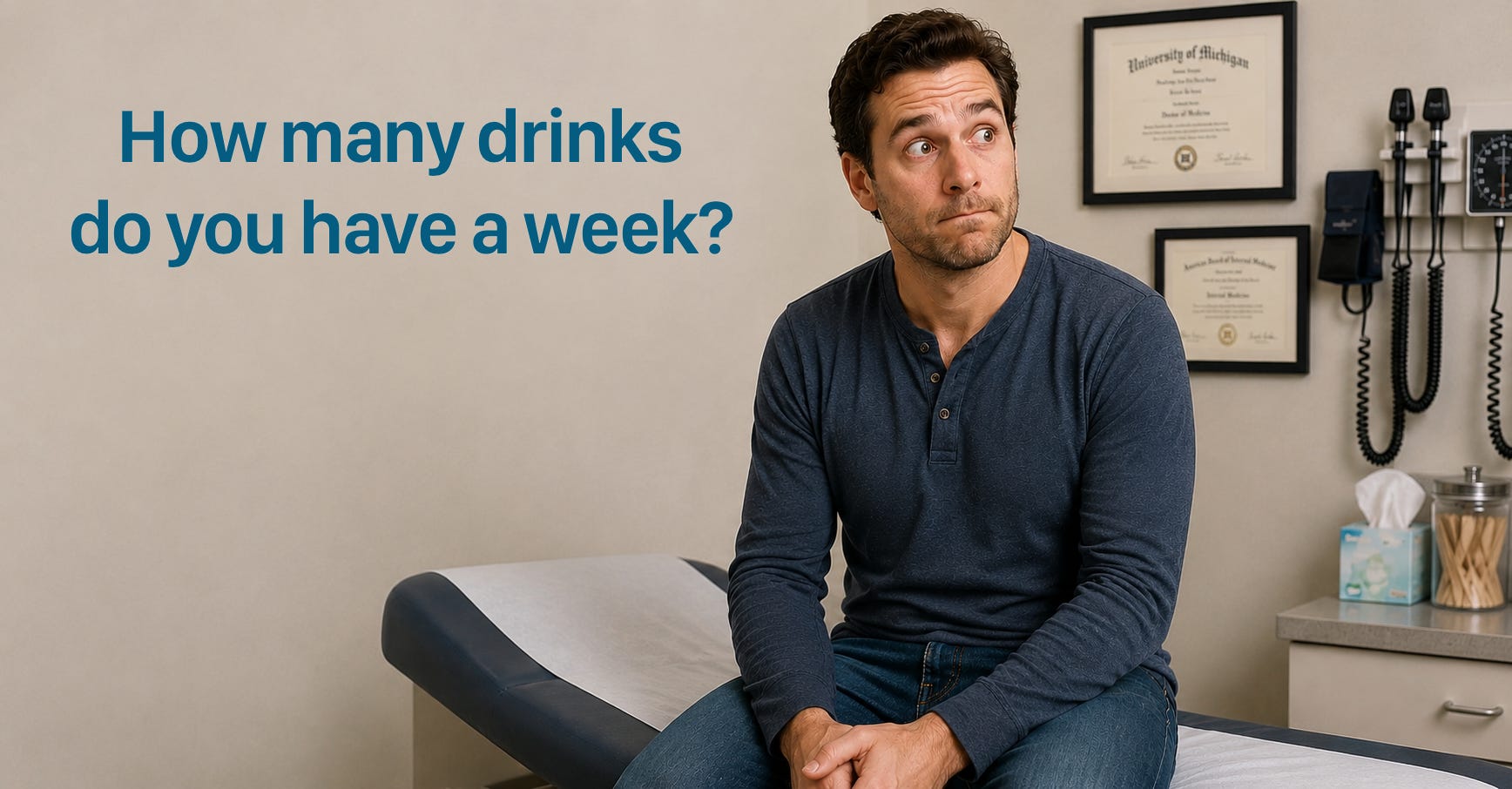
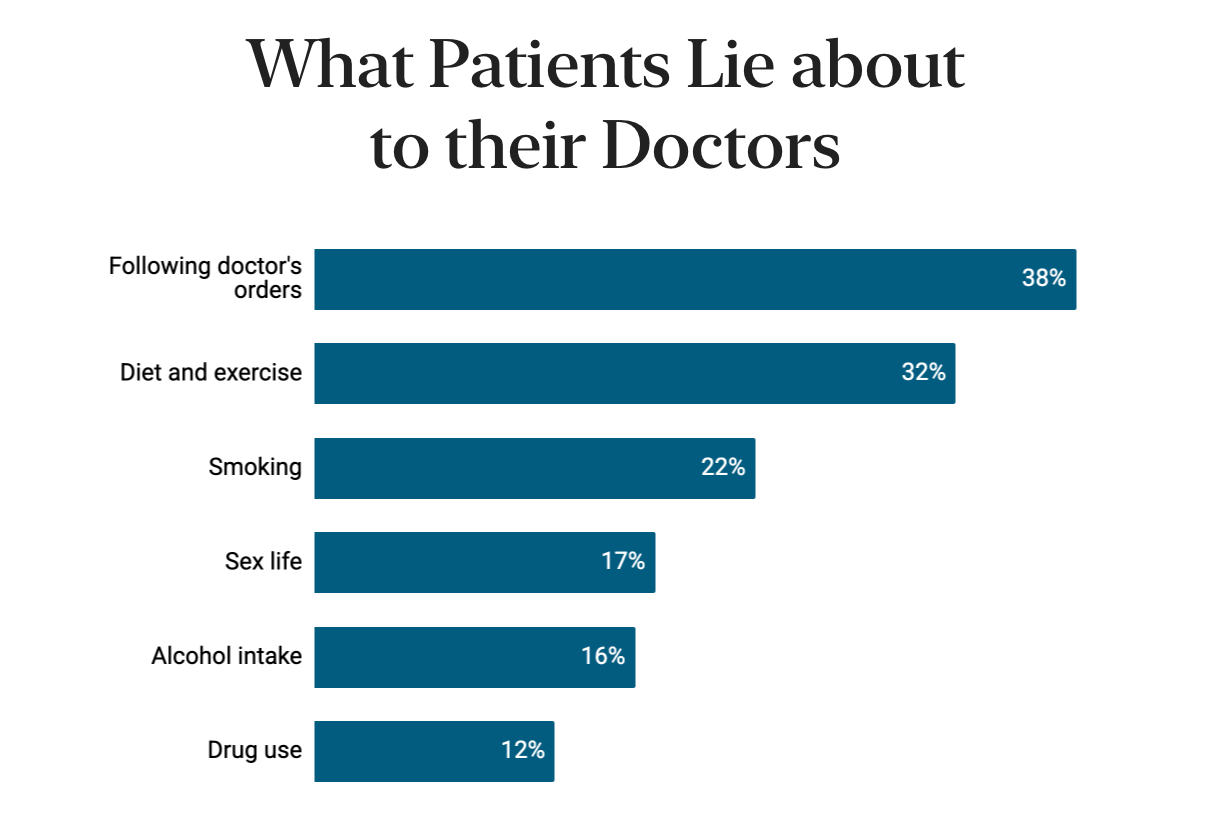
They say one or two drinks a night, maybe three on weekends. The real number is often higher. And alcohol consumption is just one of the sensitive topics patients often don’t answer honestly. How about whether you’re actually taking your medication, whether you’ve been exercising, whether you’ve been following the diet you promised you would, and what’s happening with your sex life?
Why Do Patients Lie To Their Doctors?
In 2018, researchers from the University of Utah, Middlesex Community College, the University of Michigan, and the University of Iowa surveyed more than 4,500 Americans across two age groups. They asked people whether they had ever withheld health information from a doctor across seven common scenarios.
Between 60% and 81% said yes.
The study, published in JAMA Network Open, found the most common reasons: people didn’t want to be judged or lectured to. They simply wanted their doctor to think well of them.
“Most people want their doctor to think highly of them,” said Angela Fagerlin, senior author of the study and chair of population health sciences at University of Utah Health. “They’re worried about being pigeonholed as someone who doesn’t make good decisions.”
What Is Social Desirability Bias?
Psychologists call this social desirability bias. The short version: when another person is watching, we perform the version of ourselves we wish were true.
It’s not unique to doctors. People overreport how often they vote, how much they exercise, how much they donate to charity. Wherever there’s a judgment being made by someone we want to impress, the bias kicks in. The doctor’s office is just a place where the gap could have serious consequences.
Patients Are More Likely To Be Honest with AI
A 2025 white paper from UK’s Aide Health surfaced a different pattern. When patients interacted with AI instead of a human clinician, they disclosed significantly more. The company’s conversational AI platform found that 26% of asthma patients admitted to not taking their medication as prescribed — a figure far higher than rates typically reported in face-to-face consultations with a doctor.
Being more honest with technology than a human has been around since the dawn of computer human interaction. As early as the 1960s, people disclosed surprisingly personal information to the very first AI chatbot, ELIZA, treating it as if it understood them, even though it was only a simple pattern‑matching program.

What This Means for the Value of Health AI
When your doctor asks how many drinks you have per week and you say two, your doctor makes a decision based on two. When you tell a health AI the truth, and it can also read your liver function labs from three different hospitals, it’s working with something closer to what’s actually happening in your body.
Doctors train for a decade, physically examine you, read the room, and catch things no algorithm will catch. But a system that receives honest information and has access to your complete medical record is working with better inputs than a clinician who receives sanitized or truncated versions.
Better inputs don’t guarantee better outputs, but incomplete information is one of the most reliable paths to a wrong answer. If giving an AI your honest health story without the fear of being judged feels more comforting than deciding how much you want to tell your doctor while sitting on that loud, crinkly paper, try telling your story to HealthScout. It’s free in the App Store.
But if asked, does your doctor lie to you?